
Basilicata

pisticci
Pisticci rises along a hillside in the southern reaches of Basilicata, where rows of whitewashed houses cascade down the slope in a striking, almost geometric pattern. The town stands out against the ...

matera
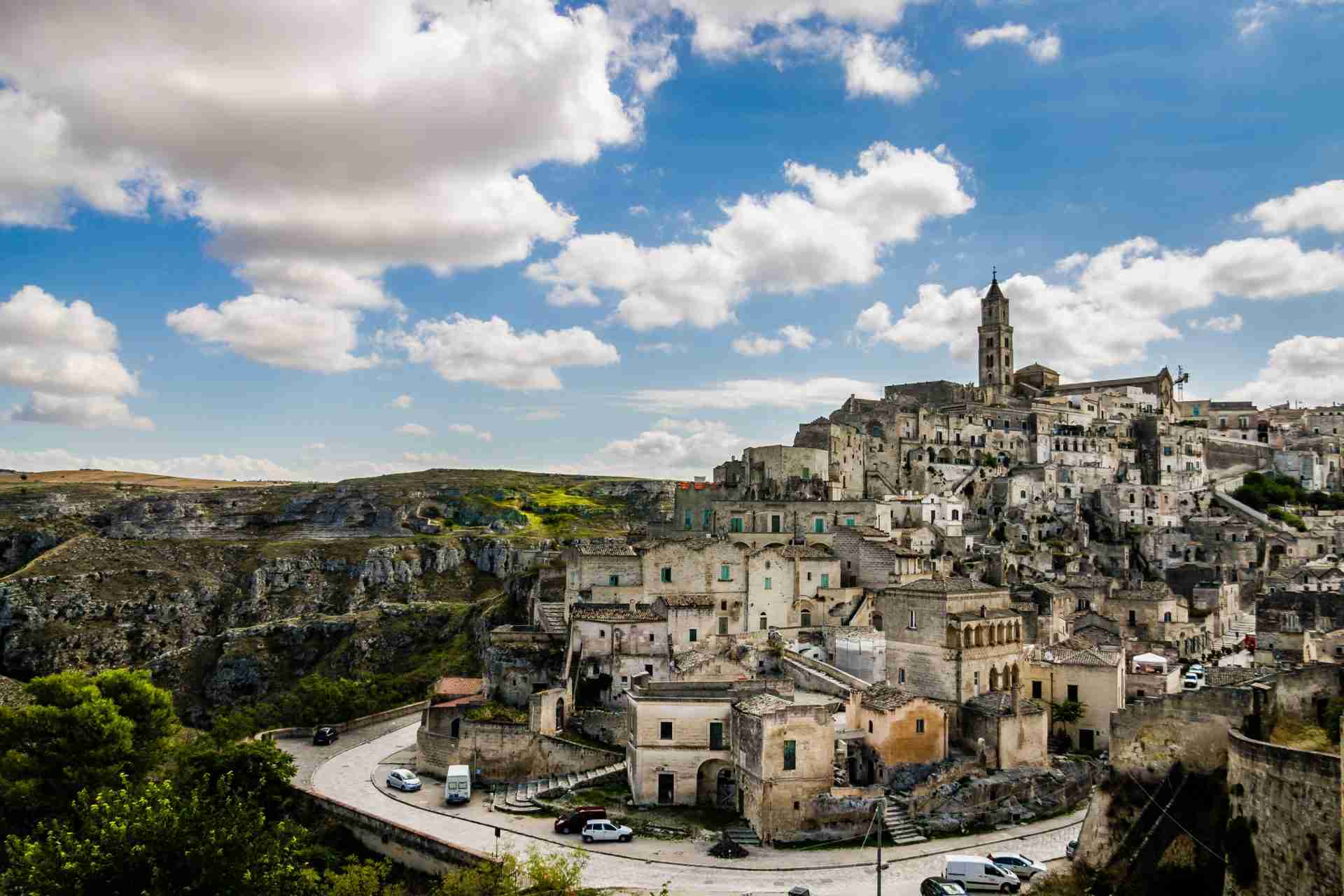
Matera rises from the rocky landscape of southern Italy with a presence that feels both ancient and elemental. Carved directly into limestone cliffs, the town is defined by the Sassi—an intricate netw...
pisticci
Pisticci rises along a hillside in the southern reaches of Basilicata, where rows of whitewashed houses cascade down the slope in a striking, almost geometric pattern. The town stands out against the ...
matera
Matera rises from the rocky landscape of southern Italy with a presence that feels both ancient and elemental. Carved directly into limestone cliffs, the town is defined by the Sassi—an intricate netw...
About Basilicata
The landscape feels raw and sculpted, with the Lucanian Apennines running through much of the region. Hills appear dry and rugged in places, while in others they soften into cultivated fields and small patches of green. The overall impression is one of space and stillness, where the environment seems to stretch without interruption.
Basilicata's towns often sit in striking positions—perched on hillsides or carved into rock. The most notable example is Matera, where ancient cave dwellings known as the Sassi form a landscape that feels almost prehistoric. Stone structures blend into the earth itself, creating a continuity between human presence and the natural surroundings.
Elsewhere, villages remain small and quiet, with narrow streets and a strong sense of local identity. Life moves slowly, shaped by tradition, agriculture, and close community ties. There is little sense of urgency, and much of the region retains a feeling of authenticity that comes from limited outside influence.
Though it has a short stretch of coastline on both the Ionian and Tyrrhenian seas, Basilicata is defined more by its interior than its shores. The experience here is not about variety or spectacle, but about depth—of landscape, history, and atmosphere.
What sets Basilicata apart is its sense of timelessness. It feels less altered by modern trends, offering instead a quieter, more reflective view of southern Italy, where the connection between land and life remains direct and enduring.